Petra Flores · 13 October 2026
How Ant Colony Engineering Shapes Soil Nutrient Distribution in Vast Rainforest Expansions
Ant Colonies as Soil Architects in Expansive Tropical Zones
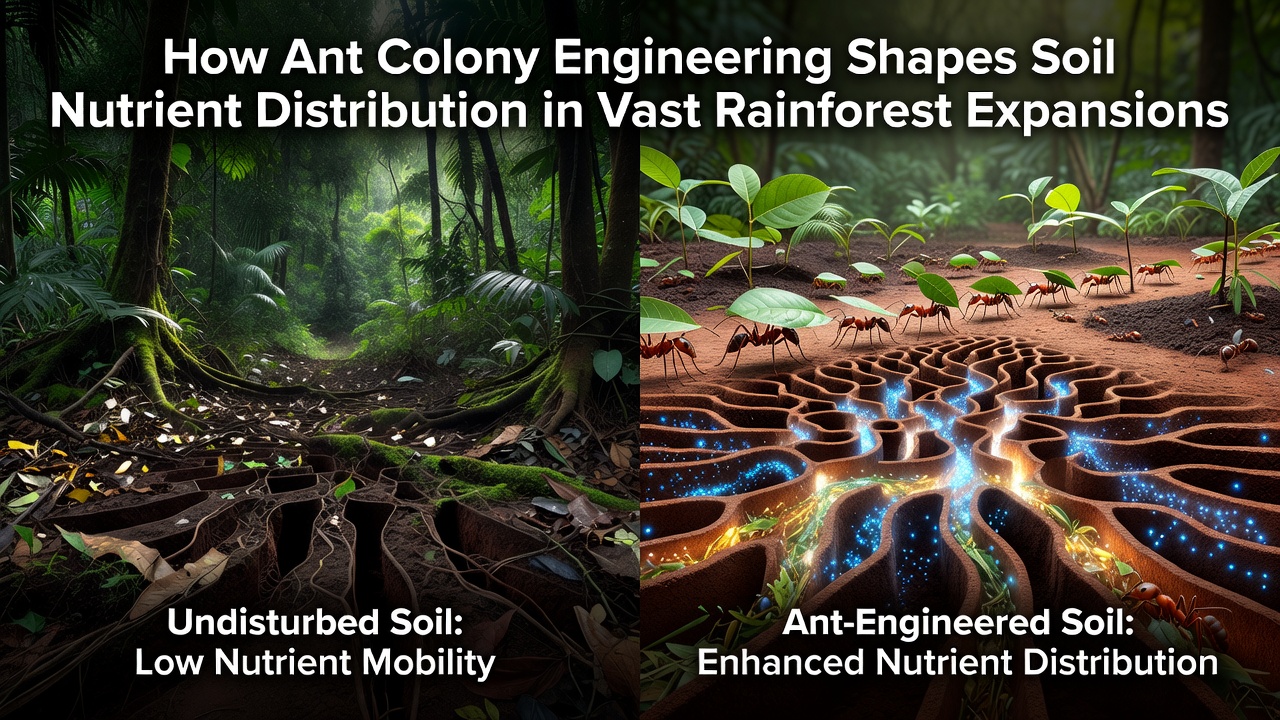
Rainforest ants build complex underground networks that alter soil structure across wide areas, and researchers tracking these activities note how the insects transport organic debris, mineral particles, and microbial communities through multiple horizons. Leafcutter species such as Atta and Acromyrmex create chambers that reach several meters deep while depositing plant fragments and waste products at varying depths, which shifts the vertical placement of carbon, nitrogen, and phosphorus. Field measurements in the Amazon basin show elevated nutrient concentrations near nest entrances compared with surrounding matrix soil, and the pattern holds across multiple hectares where colony density remains high.
Observers note that these engineering efforts do not occur in isolation because worker ants continuously excavate and backfill tunnels, which improves water infiltration and gas exchange. The resulting macropores allow rainfall to carry dissolved nutrients deeper while also bringing subsurface minerals toward the surface during mound construction. Data collected over successive wet and dry seasons indicate that such turnover rates can exceed those produced by earthworms alone in the same plots.
Mechanisms Driving Nutrient Redistribution
Ants harvest fresh foliage, carry it underground, and cultivate fungal gardens that break down cellulose and lignin, releasing plant-available forms of nitrogen and phosphorus in the process. Waste chambers accumulate frass and exhausted substrate, concentrating these elements until heavy rains or further digging disperses them outward. Studies conducted by the Brazilian Agricultural Research Corporation document how such localized hotspots increase available phosphorus by factors of two to five within one meter of active nests, while potassium levels fluctuate according to the depth of chamber placement.
Soil mixing also occurs laterally as ants expand foraging trails and satellite nests. In October 2026, teams using ground-penetrating radar at sites in northern Peru recorded new tunnel extensions that connected previously separate colonies, creating continuous pathways for nutrient movement across tens of meters. This connectivity allows phosphorus-rich particles from one mound to reach adjacent root zones, altering the spatial heterogeneity of the forest floor.
Scale of Impact Across Vast Rainforest Expansions
Across the central Amazon and parts of the Congo basin, ant biomass rivals that of all vertebrates combined, which amplifies the cumulative effect on soil chemistry. Satellite imagery combined with ground surveys reveals that areas with high Atta colony density display distinct spectral signatures associated with increased organic matter near the surface. Researchers from CSIRO in Australia have mapped similar patterns in Queensland rainforests, confirming that nest-related nutrient pulses support distinct microbial communities that further accelerate decomposition and mineralization.
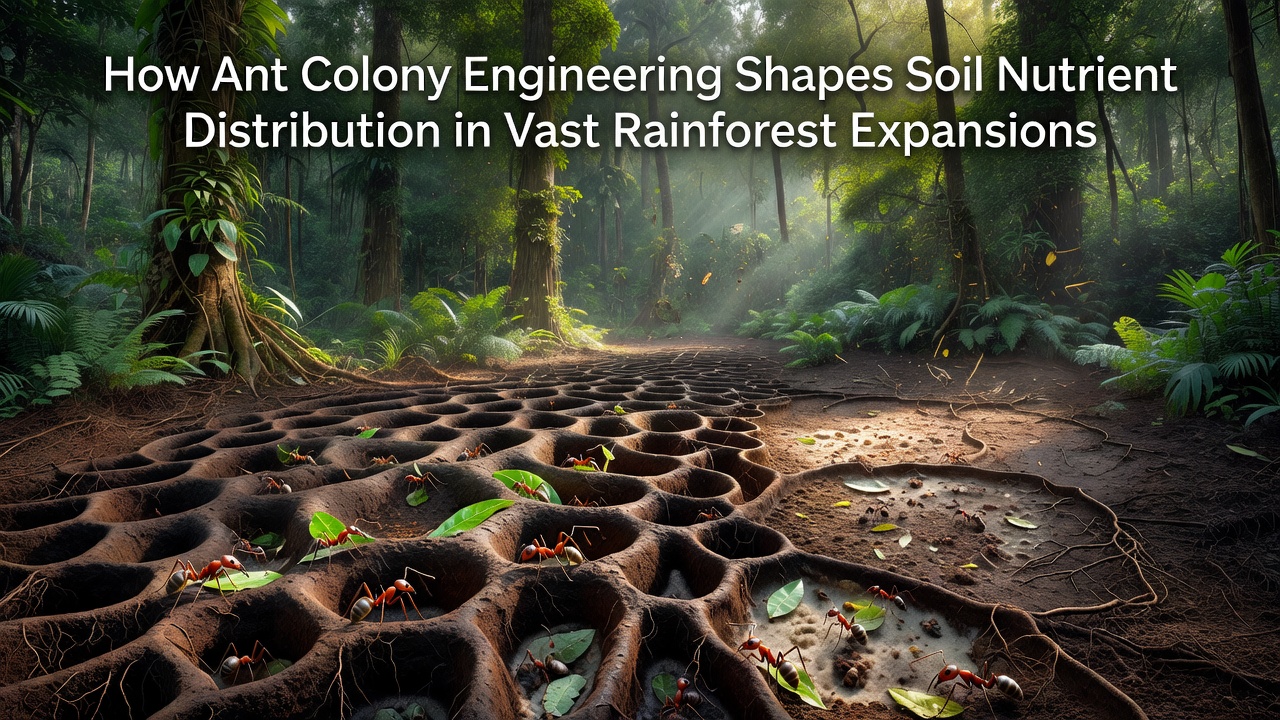
Because many ant species maintain perennial nests that persist for decades, the engineered patches function as long-term reservoirs. When colonies relocate or die out, abandoned chambers collapse gradually, leaving behind enriched soil columns that continue to influence tree growth for years afterward. This legacy effect contributes to the patchy nutrient landscape observed in mature stands where canopy gaps allow more light and rainfall to reach the forest floor.
Interactions with Vegetation and Microbial Communities
Root systems respond to the altered nutrient gradients by proliferating near active nests, which in turn supplies more carbon to the ants through exudates and litter fall. Mycorrhizal fungi associated with these roots extend the reach of the nutrient hotspots, transporting phosphorus and nitrogen to host trees that may stand several meters away. Experiments removing ant colonies from experimental plots show rapid homogenization of surface soil chemistry within two growing seasons, underscoring the insects' role in maintaining spatial variability.
Microbial diversity also shifts in response to the altered oxygen and moisture regimes inside nests. Aerobic bacteria thrive in the upper chambers while anaerobic processes dominate deeper waste zones, creating micro-sites that cycle nitrogen through fixation, nitrification, and denitrification within centimeters of each other. These internal gradients export distinct nitrogen compounds into the surrounding soil matrix during rainfall events.
Conclusion
Ant colony engineering therefore functions as a persistent driver of nutrient heterogeneity throughout large rainforest landscapes. The combination of deep excavation, organic matter transport, and microbial cultivation produces measurable changes in soil fertility that extend well beyond individual nest boundaries. Ongoing monitoring programs continue to quantify these contributions, providing baseline data that future land-management decisions can reference when assessing ecosystem resilience in tropical regions.