Vera Bauer · 29 September 2026
How Bioluminescent Organisms Guide Nighttime Navigation for Ground-Foraging Creatures in Dense Vegetation Zones
Ground-foraging creatures in dense vegetation zones rely on bioluminescent organisms to move through low-light environments where visual cues from the canopy remain scarce, and researchers have documented multiple species that emit steady light signals from chemical reactions involving luciferin and luciferase enzymes. These organisms produce light through oxidation processes that occur continuously in fungi, insects, and certain bacteria, creating visible markers that align with the needs of nocturnal animals searching for food sources on the forest floor.
Mechanisms Behind Bioluminescent Signals
Bioluminescence in these zones often stems from fungi such as species in the Mycena genus that colonize decaying wood and leaf litter, while firefly larvae and some millipedes add intermittent flashes that researchers track across tropical and temperate understories. The light wavelengths typically fall between 500 and 570 nanometers, a range that penetrates dense foliage without rapid absorption, and data from field studies show that ground-level foragers adjust their movement paths when these emissions remain constant over several hours each night. Chemical pathways vary by organism yet share a common requirement for oxygen and ATP, which allows light production to continue even when ambient temperatures drop during evening hours.
Navigation Patterns Observed in Specific Creatures
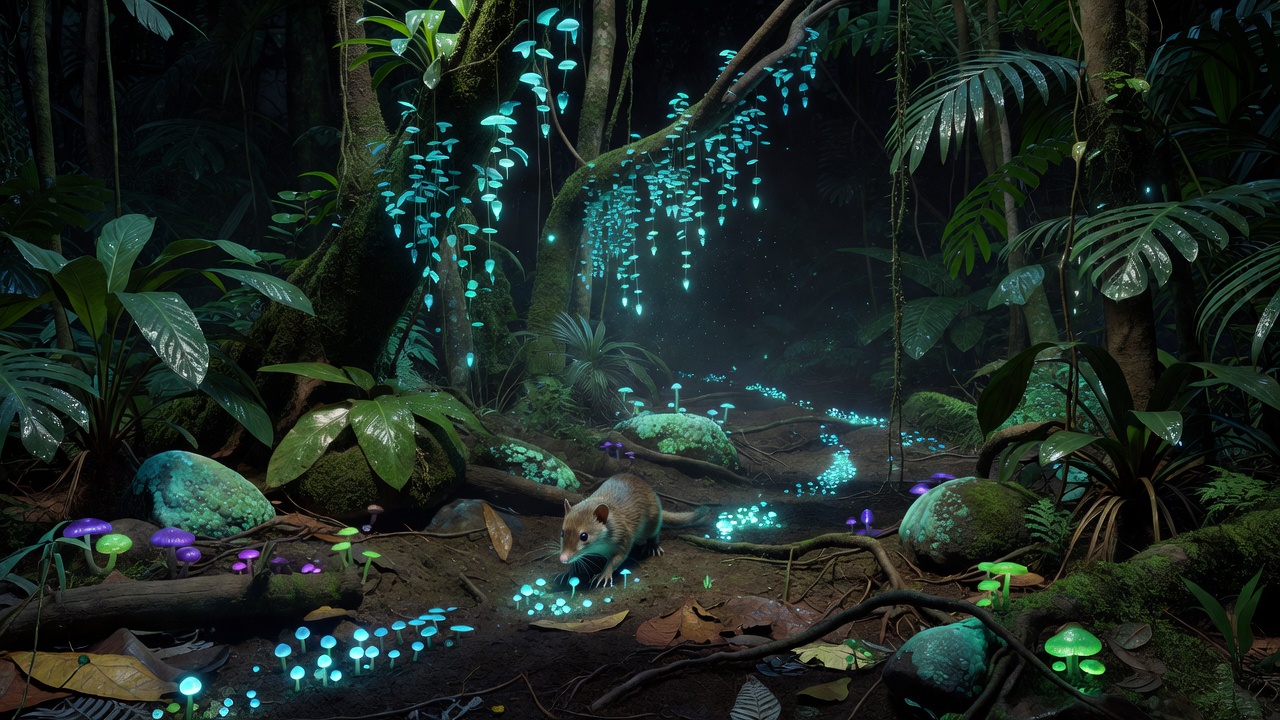
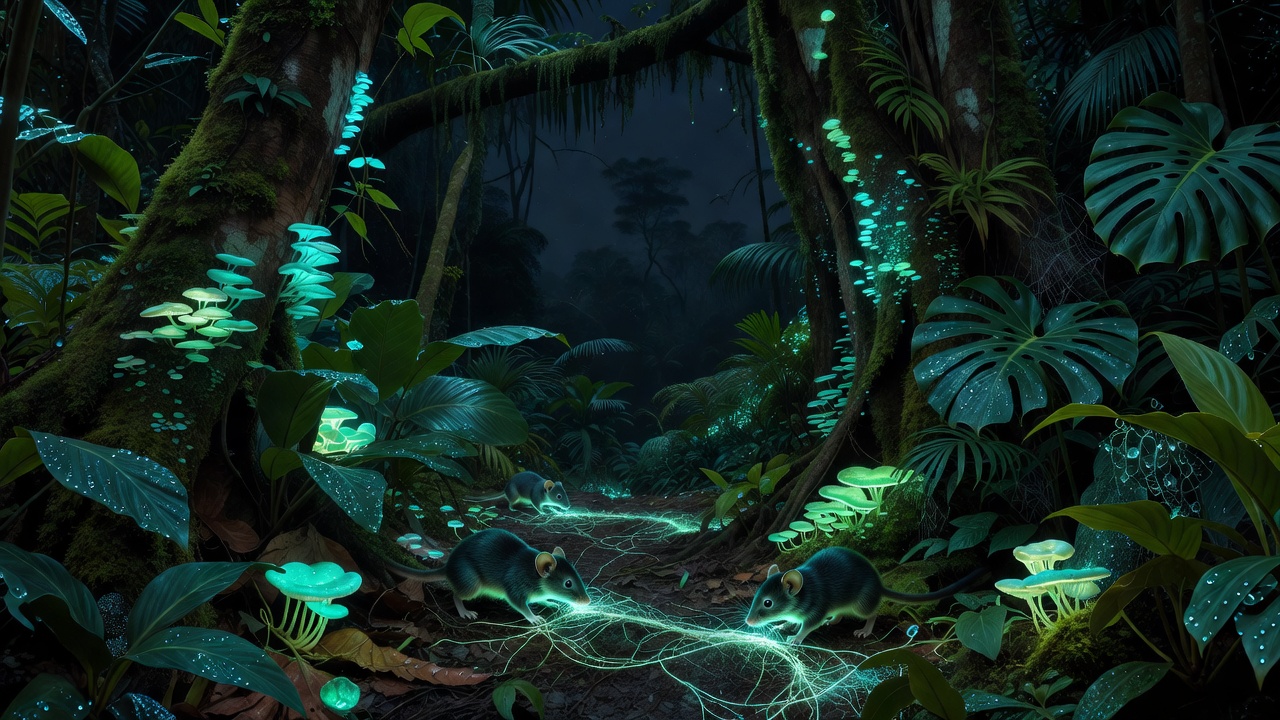
Small mammals including certain rodent species follow linear trails marked by glowing fungal colonies that cluster along root systems, whereas beetles and other invertebrates orient toward brighter patches that indicate open spaces between thick root mats or fallen logs. Studies conducted in Southeast Asian and Central American forests reveal that these animals maintain consistent directional headings when bioluminescent markers stay visible, and observers note reduced circling behavior compared to areas lacking such signals. Ground-foraging birds that descend at dusk also integrate these light points into short hops between feeding sites, although their primary reliance remains on auditory cues supplemented by the visual glow.
Environmental Factors That Influence Light Visibility
Moisture levels directly affect emission intensity because many bioluminescent fungi require high humidity to sustain the enzymatic reactions, and precipitation events in September often increase the number of active light sources across the forest floor. Soil composition and canopy density further modulate how far the light travels, with denser vegetation zones creating pockets where signals cluster and guide creatures along natural corridors formed by animal trails or water runoff channels. Temperature fluctuations play a secondary role since most emitting organisms maintain output across ranges typical of nighttime conditions in these habitats.
Interactions Between Organisms and Foragers
Mutual benefits emerge when bioluminescent fungi attract insects that aid spore dispersal while simultaneously providing navigation references for larger ground-dwellers, and field observations confirm that areas with higher fungal density host greater activity from foraging species. Some researchers link these patterns to seasonal shifts, noting that peak emission periods coincide with increased invertebrate movement during warmer months. Data collected by teams at institutions such as the Commonwealth Scientific and Industrial Research Organisation in Australia demonstrate that removal of glowing markers through experimental clearing leads to more fragmented movement routes among test subjects.
Research Findings from Diverse Regions
Investigations in North American temperate forests highlight the role of glow-worm colonies in guiding salamanders and small mammals, whereas European studies focus on bacterial mats in leaf litter that produce diffuse light usable by ground beetles. Canadian research groups have recorded similar patterns in boreal understories where moisture supports persistent emissions, and these findings align with observations from New Zealand sites where unique glow-worm caves extend the principle into subterranean zones connected to surface vegetation. Each region supplies distinct species combinations yet shows consistent evidence that bioluminescent cues reduce disorientation in low-visibility settings.
Conclusion
Evidence accumulated across multiple continents establishes that bioluminescent organisms supply reliable spatial references for ground-foraging creatures operating in dense vegetation, and ongoing monitoring programs continue to map how these natural light systems interact with seasonal and climatic variables. Continued documentation of emission patterns and animal responses will refine understanding of these ecological relationships without introducing unsubstantiated interpretations.