Vera Keller · 15 September 2026
Shifting Canopy Dynamics and Their Impact on Ground-Level Species Interactions in Expansive Tropical Zones
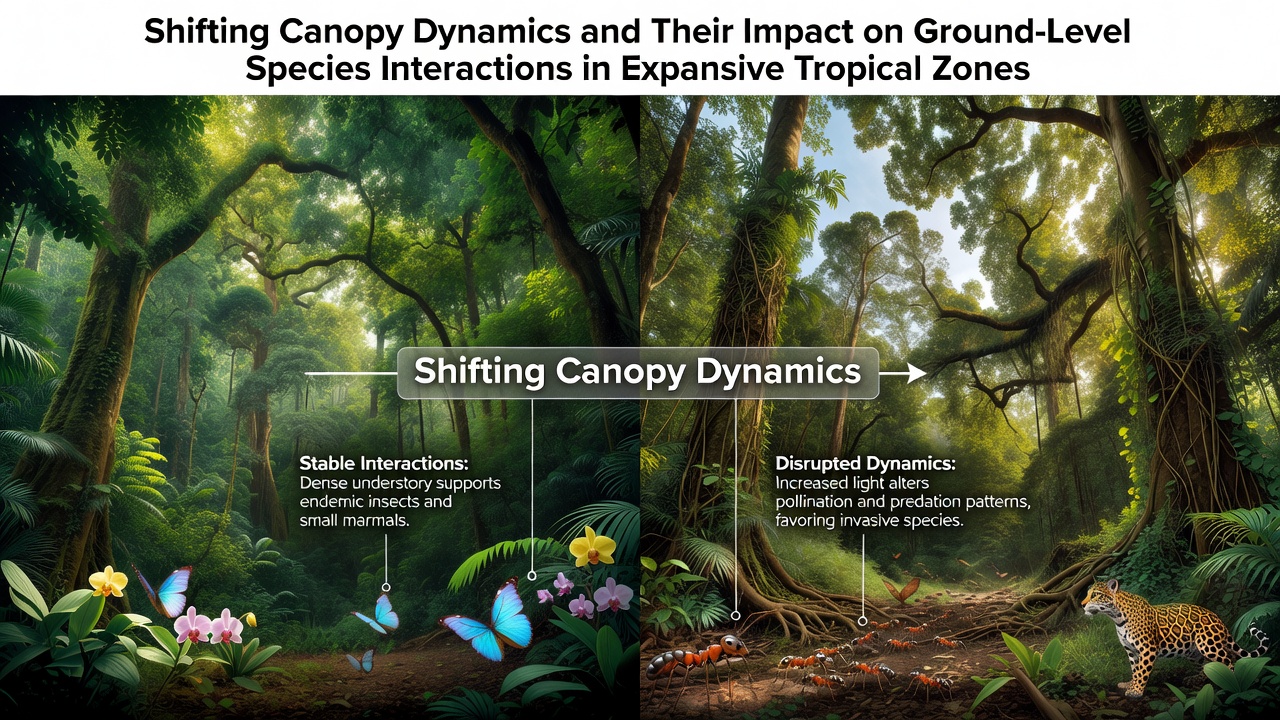
Researchers track canopy dynamics across expansive tropical zones where upper tree layers undergo structural changes from altered rainfall patterns, temperature increases, and episodic disturbances that open new gaps or thicken existing cover in unexpected ways. These shifts modify light penetration, humidity retention, and nutrient cycling at ground level, which in turn reshapes how plants compete for resources and how animals locate food or shelter. Observers note that such modifications do not occur uniformly; instead they create patchy conditions that favor certain interactions while diminishing others across wide areas from the Amazon basin through Central African forests to Southeast Asian lowlands.
Drivers of Canopy Change Across Tropical Regions
Data from long-term monitoring programs indicate that canopy height and density fluctuate in response to both chronic stressors and sudden events, and scientists have recorded measurable declines in leaf area index in multiple sites since the early 2000s. Rising vapor pressure deficits cause some tree species to reduce transpiration, which thins upper layers over successive seasons, while windstorms and lightning strikes create larger gaps that persist for years. In September 2026, satellite records compiled by international forestry networks showed accelerated gap formation in several protected reserves, prompting renewed field campaigns to quantify downstream effects on understory communities.
Soil nutrient depletion and invasive vine proliferation further compound these changes because they alter tree growth rates and mortality patterns that determine how quickly new canopy closes. Researchers at institutions spanning South America, Africa, and Australasia have documented that liana loads increase under drier conditions, and this additional weight stresses branches until they break or die back, leaving persistent openings that allow more direct solar radiation to reach the forest floor.
Effects on Light, Temperature, and Moisture at Ground Level
Once canopy cover decreases, ground-level photosynthetically active radiation rises sharply in affected patches, and this increase drives faster growth among shade-intolerant seedlings while suppressing shade-adapted herbs and ferns. Temperature fluctuations widen as well because less leaf mass buffers daily swings, which raises evaporative demand and dries leaf litter more rapidly. Species that rely on stable microclimates, such as certain amphibians and litter-dwelling invertebrates, experience compressed activity windows or must relocate to remaining shaded refugia.
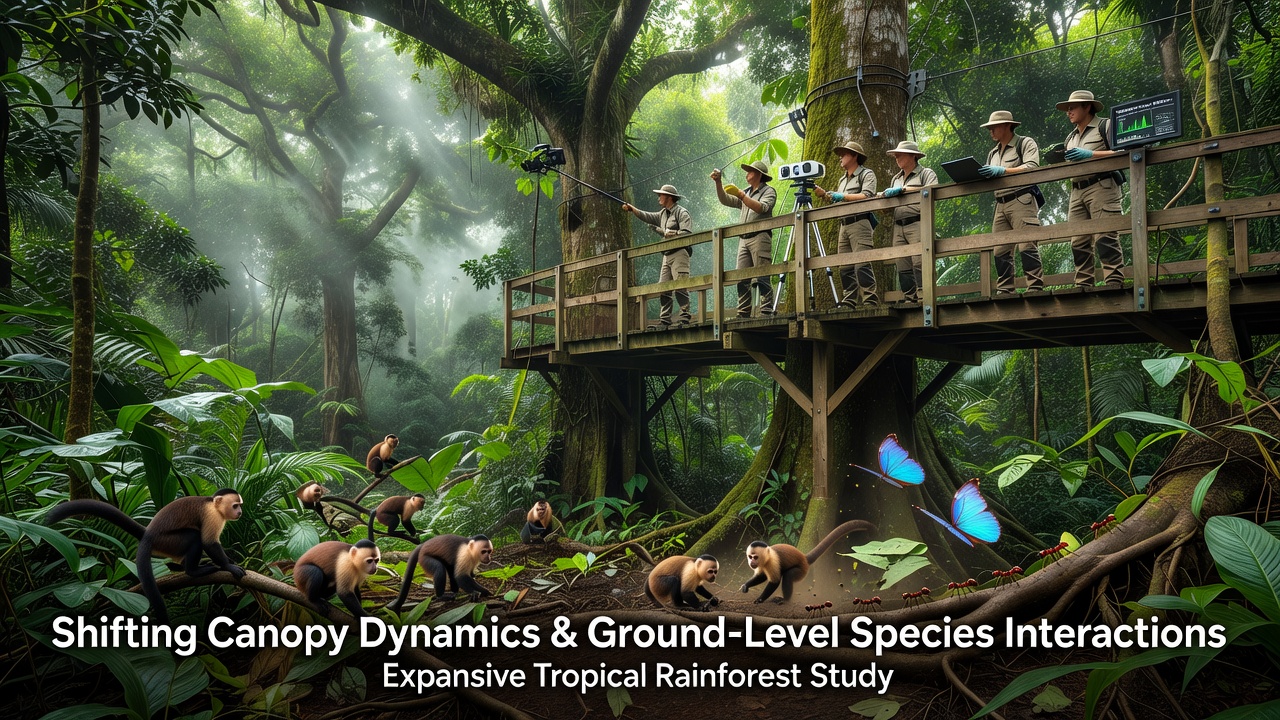
Moisture gradients steepen around gap edges, and this creates transitional zones where both drought-tolerant and moisture-loving organisms coexist in narrow bands. Studies tracking soil moisture probes across multiple transects reveal that these gradients persist for months after initial canopy opening, which extends the period during which competitive outcomes among ground-layer plants are decided.
Altered Species Interactions and Community Structure
Ground-level species interactions shift when canopy changes modify encounter rates between predators and prey, pollinators and flowers, and seed dispersers and fruiting plants. Increased light often boosts flowering in understory shrubs, yet it simultaneously attracts more herbivorous insects that can overwhelm plant defenses before seeds mature. Ants and beetles that forage in litter respond by expanding territories into newly lit areas, and this redistribution changes predation pressure on smaller arthropods adn germinating seedlings.
Vertebrates such as rodents and ground-foraging birds adjust their ranging behavior to exploit or avoid the altered patches, and telemetry data collected across several tropical field stations show that home ranges contract or expand depending on whether new gaps provide additional food or expose animals to higher predation risk. Plant-animal mutualisms also respond because seed dispersal distances shorten when canopy gaps fragment movement corridors for mammals and birds that carry seeds between distant forest patches.
Evidence from multi-year censuses conducted by research teams in Brazil, Gabon, and Papua New Guinea indicates that certain understory tree species recruit more successfully in moderate gaps while others decline when gaps exceed a threshold size. These recruitment differences feed back into future canopy composition because the trees that establish today will determine gap dynamics decades later.
Conclusion
Long-term records and ongoing monitoring efforts demonstrate that canopy dynamics in expansive tropical zones continue to influence ground-level species interactions through measurable changes in resource availability and microclimate. Continued collection of integrated above- and below-canopy data remains essential for understanding how these processes unfold across continents and decades.